


I’d never photographed a solar eclipse before, but there were two things I wanted to come away with: a landscape showing the phases of the eclipse moving across the sky, and a close-up time-lapse of the whole thing.
Watch the behind-the-scenes film on YouTube ↗
The second one was partly to help justify to my wife why I’d bought a Sony 200–600mm lens. But also because it would look cool, and it was completely different to anything I’d shot before.
That was the easy part. Then we had to work out where to go, where the sun would actually be, and how I was going to get both cameras doing what I needed. I spent the best part of four days preparing for this. I still managed to find a problem with the setup while we were on the hillside.
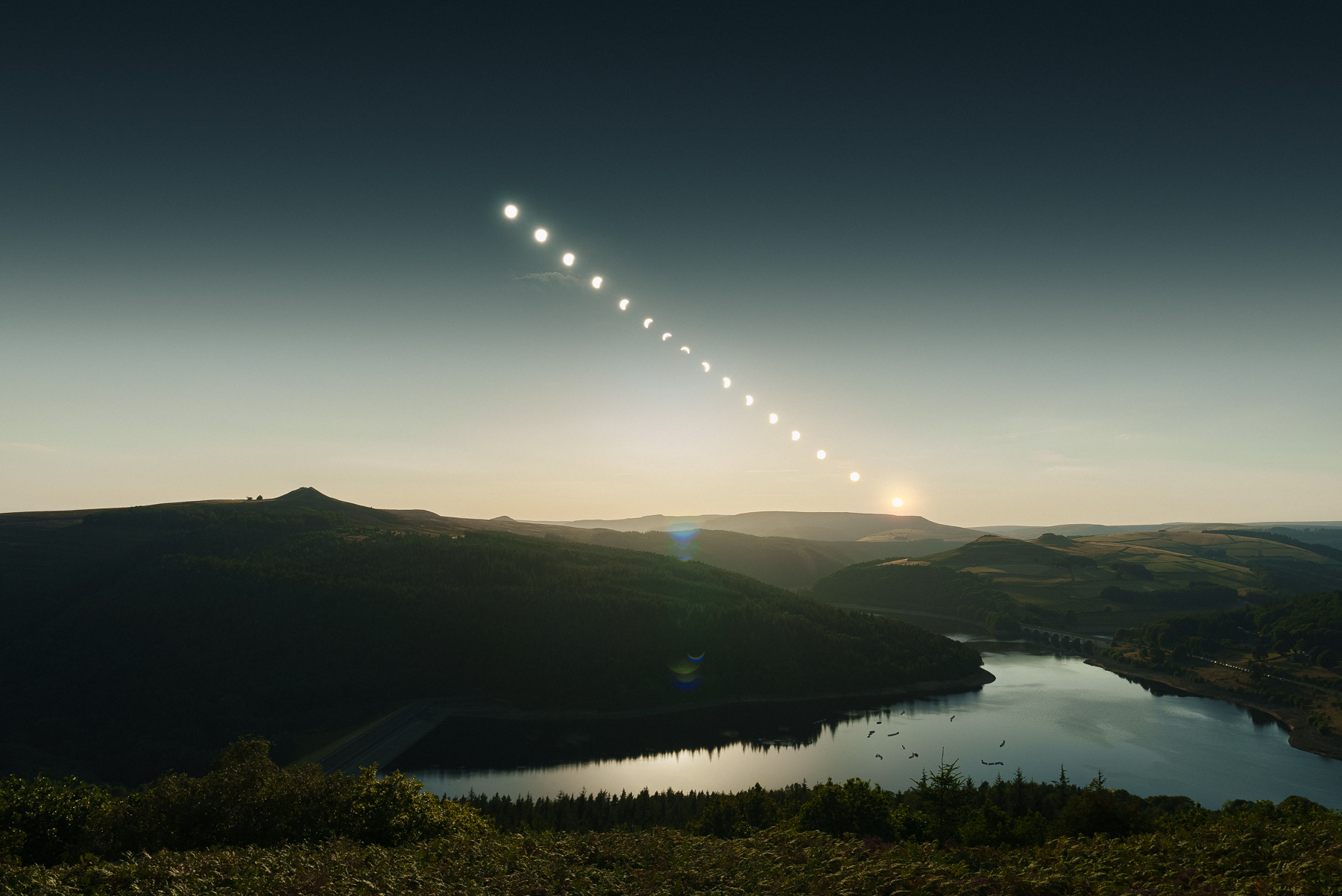
Callum and I started talking about what we wanted to capture while we were at the gym. We got on Google Maps and looked at locations around us, and the Peak District was the obvious choice. My friend Tom Whitton who I'd asked to come with us on the shoot, suggested Bamford Edge - a spot he'd personally photographed before and absolutely loved - which is where we ended up.
The view was incredible, but I needed to know whether the sun’s path would fit into the photograph I had in mind. I used Sun Tracker to check where it would be at the beginning and end of the eclipse, then worked out how to frame the landscape around that.
We ended up moving quite a way downhill from the rocks to get more in line with the reservoir. From higher up, we’d have had much more hillside in the frame. Further down, we could get the progression of the eclipse more centrally over the water.

Thankfully, the skies were pretty much clear. It wasn’t an easy climb, but looking out over that view, it was absolutely worth it.
Between us we had five cameras, but my two had quite specific jobs. The Sony A7S III with the 16–35mm would stay locked off on a tripod, photographing the landscape. The A1 with the 200–600mm would get the close-ups of the sun. I’d then combine the two in the edit.
I’d collected a Thousand Oaks solar filter from Rother Valley Optics the day before. I’d been trying to find one for days, and they had one left in stock. They put it behind the till for me while I drove over to collect it, about two hours away.
That went on the front of the 200–600mm for the close-ups. I used an external monitor to magnify the image and manually fine-tune the focus at 600mm. The whole rig was on my video tripod, with V-mount batteries powering the camera and monitor.

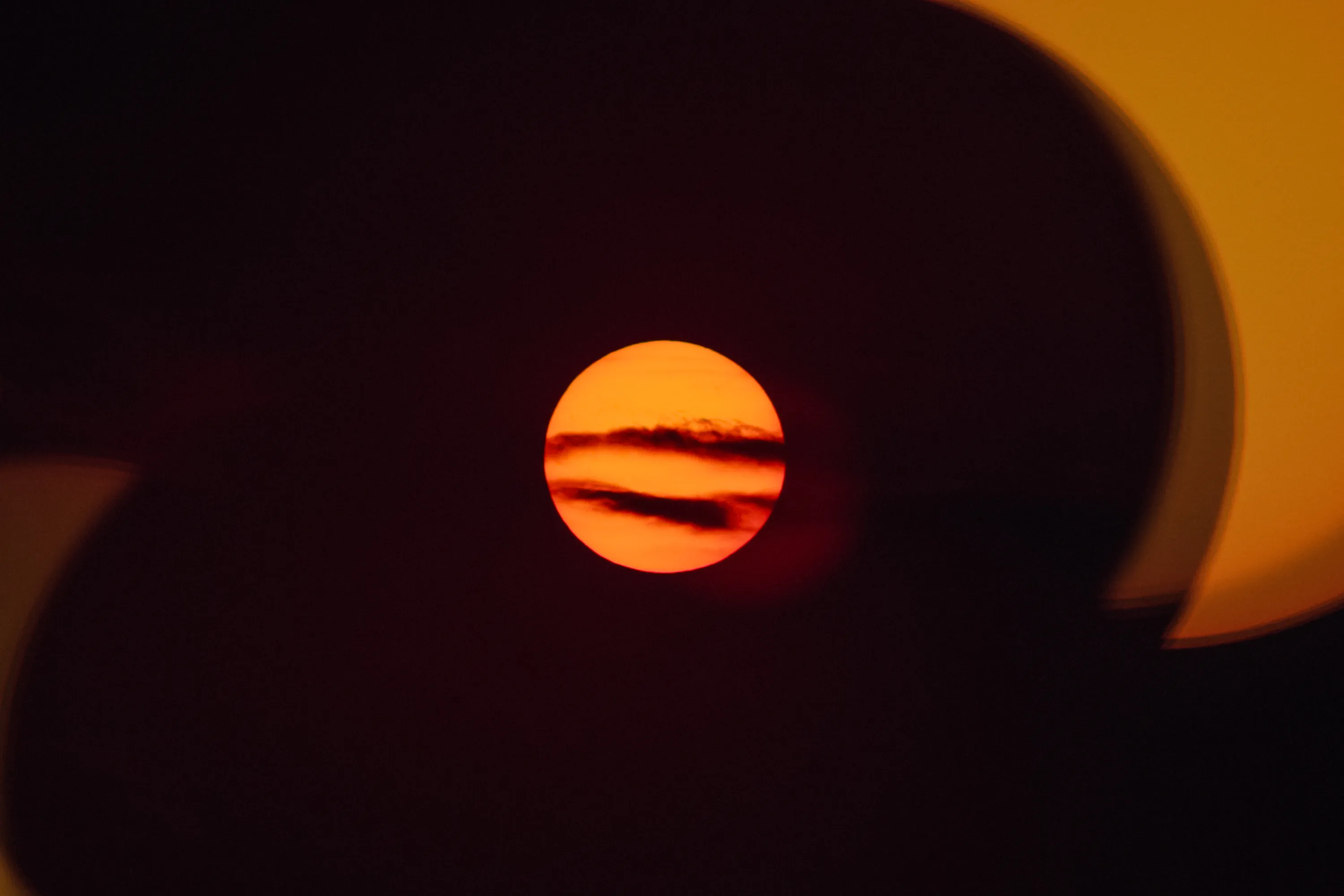
I could actually see sunspots in the photographs. I hadn’t expected to get that level of detail out of this setup, so that was pretty amazing.
I wanted the A7S III to take bracketed exposures at regular intervals. That would give me several exposures of the same scene, with different light levels to work with when I made the composite.
What I discovered while we were setting everything up was that I couldn’t use the camera’s bracketing and interval shooting at the same time. Who knew? Not me.
I wasn’t willing to give up the bracketing. I wanted to try landscape frames from different points in the eclipse, rather than decide in advance which moment would make the background. So we ended up manually triggering the A7S III every minute.

Realistically, that was complete overkill. For the number of sun positions I used in the finished composite, every five or ten minutes would probably have been enough.
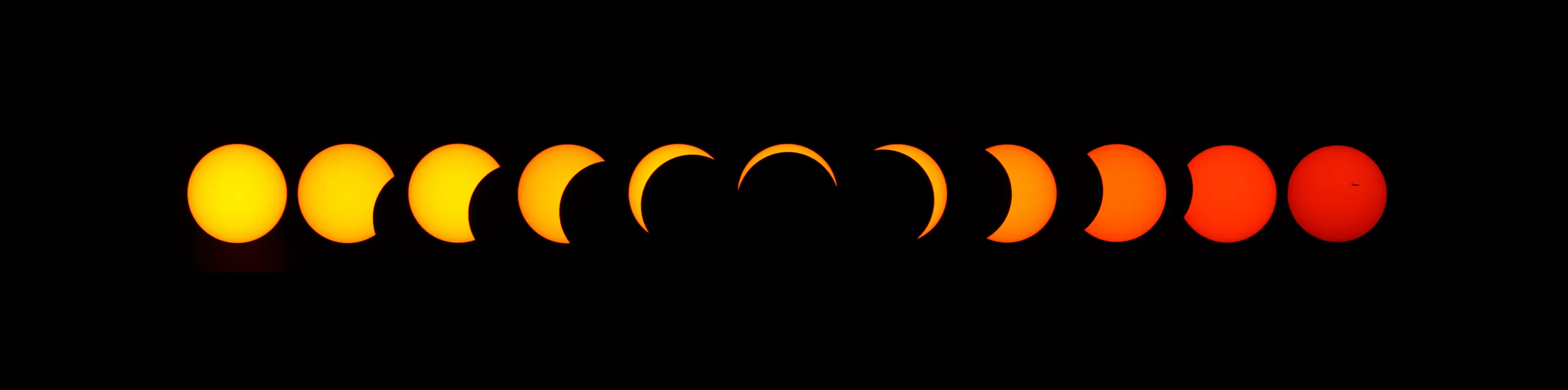
The A1 was taking its close-ups on an interval, but I didn’t have a sky tracker. Every five minutes or so I had to move the camera and reframe as the sun reached the edge of the shot. That part wasn’t too taxing. Getting all those photographs lined up afterwards was another matter.
Once it started, there was so much happening around us. The light was changing across the foliage and the reservoir, the temperature dropped, and the birds went completely quiet for a few minutes. Then they started chirping again as more of the sun appeared.
We didn’t have full totality where we were. I saw people online saying the eclipse had been a letdown, and all I could think was, where were you watching it from? From where we were, it was absolutely beautiful.

After it finished, I put the A1 into 8K video mode and filmed the last part of the sunset before the sun disappeared behind the peaks. That ended up in my reels as well. We were already there with the cameras, so I wanted to see what else I could get.
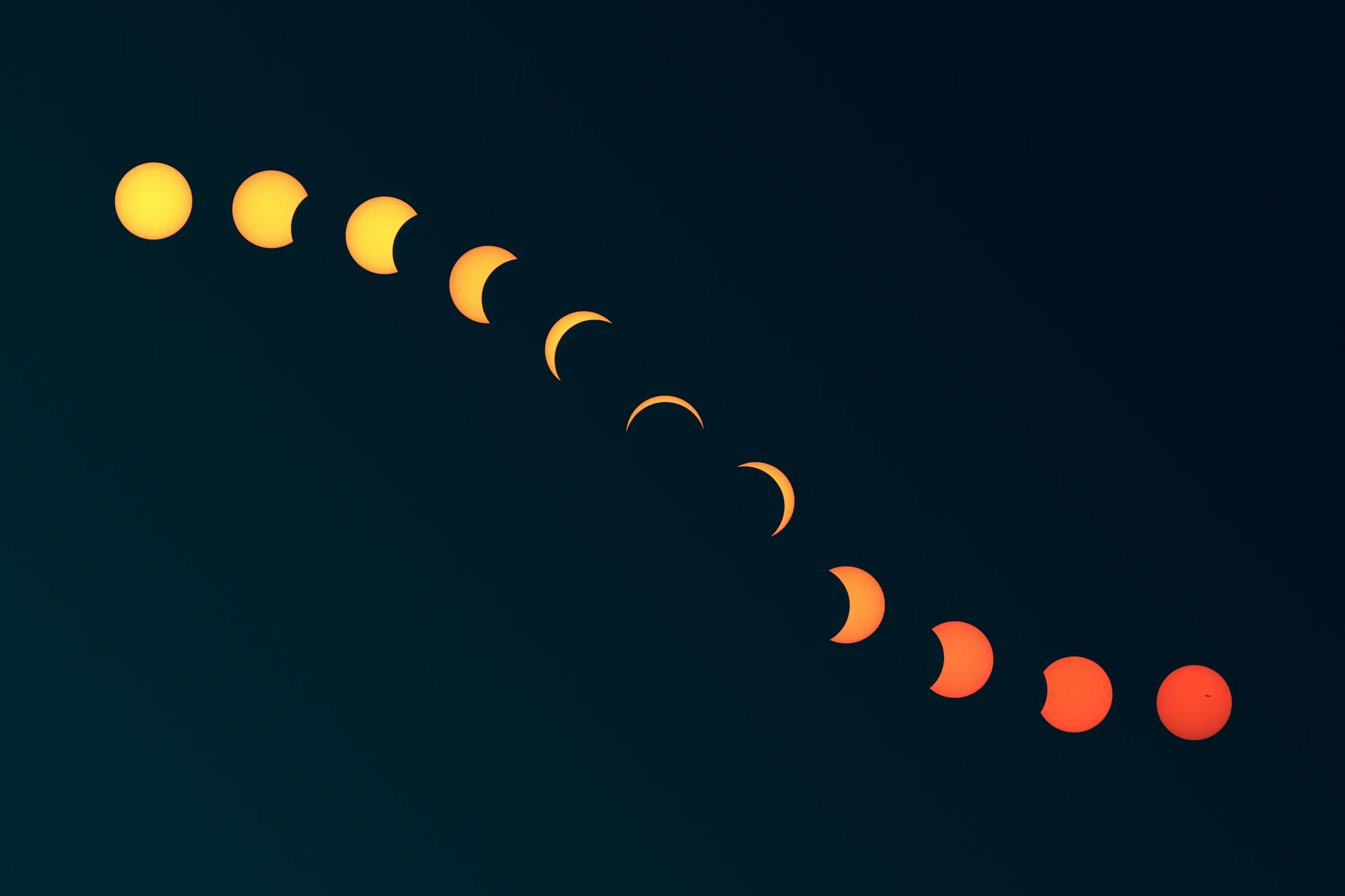
The biggest challenge in the edit was keeping the sun centred in the close-up time-lapse. Because I’d been reframing throughout the shoot, it kept moving across the image and then jumping back.
I tried tracking it in After Effects first. I changed tracking points, tried different modes, and it just wasn’t giving me the result I wanted. About ten minutes in, I could see this was going to take hours.
So I took the photographs into DaVinci Resolve and tried the Fusion tracker. It pretty much nailed it in a matter of minutes. There were still a few frames to adjust by hand, but it got me most of the way there.
The still composites were much more straightforward. For one of them, I brought five close-up frames into Photoshop as layers over a landscape photograph from the day, then combined them using blending modes. Such a simple editing technique, but I was really happy with how it turned out. I've had quite a few friends ask how I created this image, and complement me on how artsy it turned out.
I could also try different landscape frames underneath the eclipse phases and see which lighting I liked best. That was why I’d wanted those background photographs throughout the shoot.
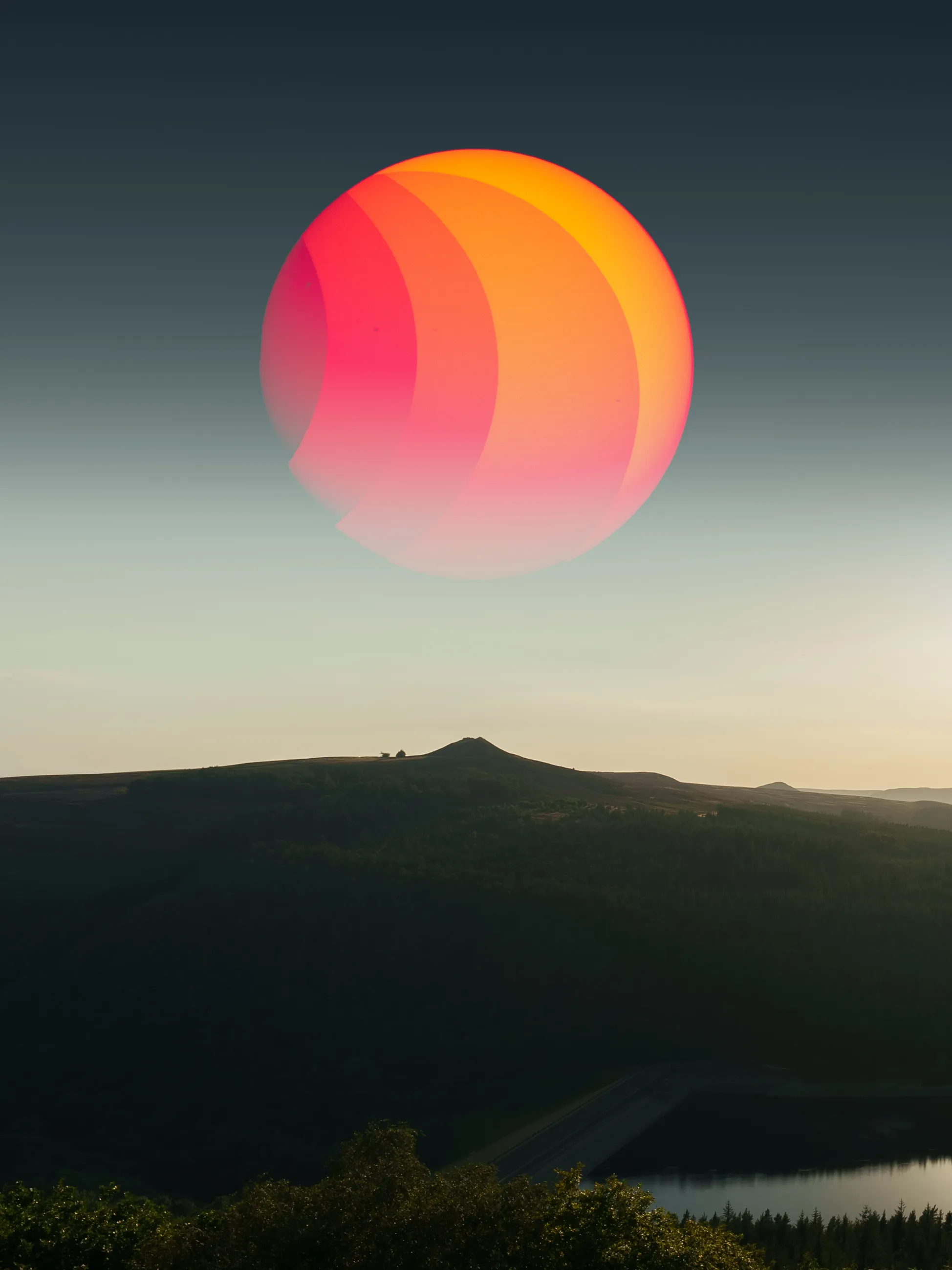
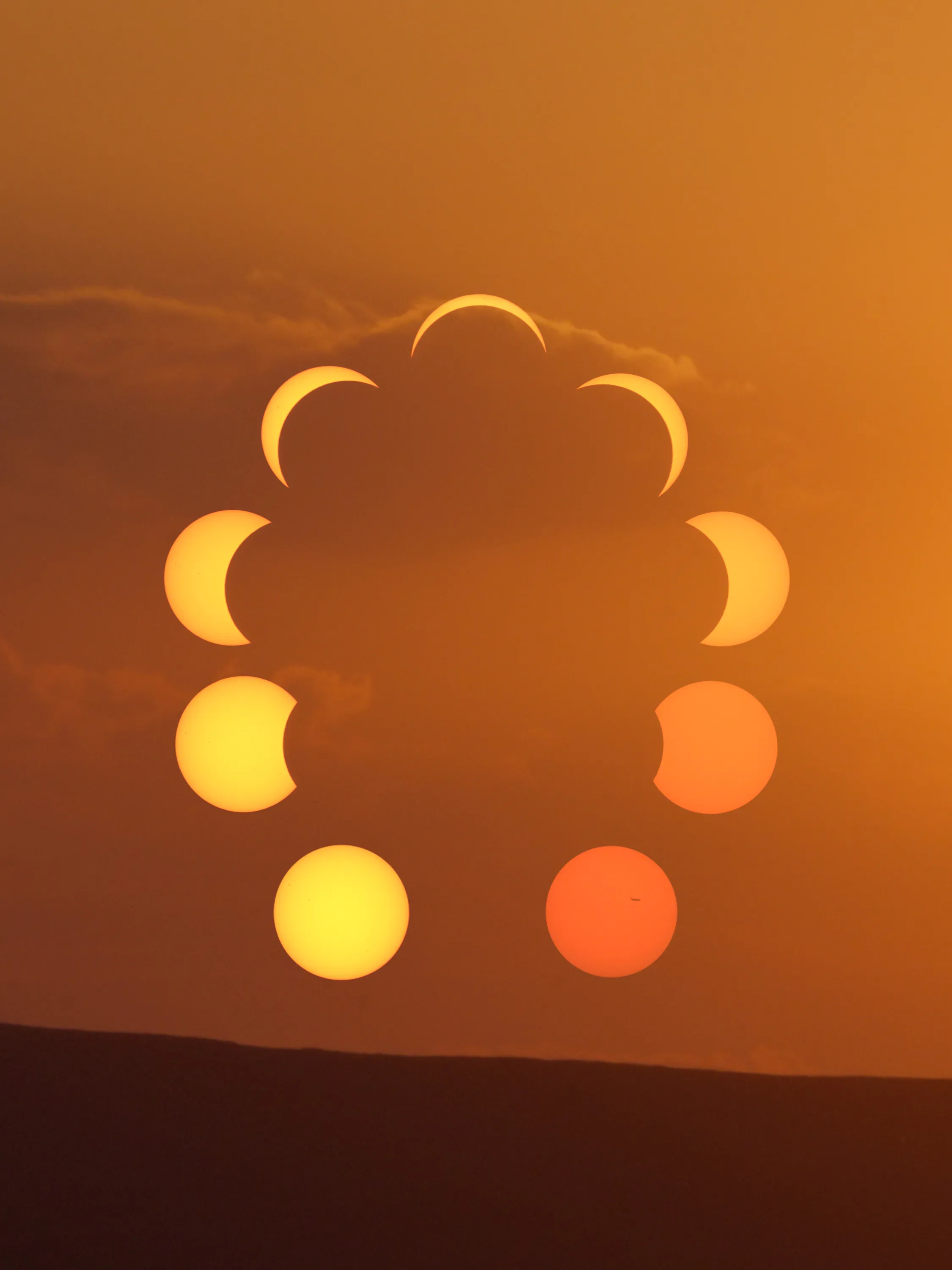
I made an animated version for a vertical video too. I cropped a landscape still to 9:16, removed the original sun in Photoshop, then masked and keyframed the clouds in After Effects to give them some movement. Over that went the aligned eclipse time-lapse, which I animated across the sky.
That’s a composite. It isn’t how it actually happened on the day. The clouds started as a still photograph, and the movement of the eclipse across that frame was added afterwards.
I hadn’t set out to make that version. It came together once I started editing, which is something I really enjoy about this kind of project. I wanted to make a piece of art that felt like mine, and working out how to combine everything was a big part of that.
Looking back, I wish I’d put the higher-resolution A1 on the landscape. I’m really happy with the close-ups, but the landscape became the image I most wanted to print. The A7S III’s 12-megapixel files are still usable; I’d just have liked more resolution for a larger print.
I’d also test the whole setup before leaving home. I’d want to try an external intervalometer and check whether it let me keep the bracketing, rather than assume it would work.
Mostly, I’d get everything ready early enough to sit down for ten or fifteen minutes before it began. Know what the cameras are doing, know when I need to intervene, and then actually watch what’s happening with my friends.
This was such a therapeutic project for me, and I’m absolutely thrilled with how it turned out. Most of my time is spent on commercial production work here atMiddlebeck Media, so I really enjoyed taking a few days off, focusing on a photography-first passion project of my own.
I’ve picked out some of my favourite photographs for the Eclipse Collection. If you’d like to support my work by having one on your wall, you can have a look there. Prints are now shipping worldwide.


